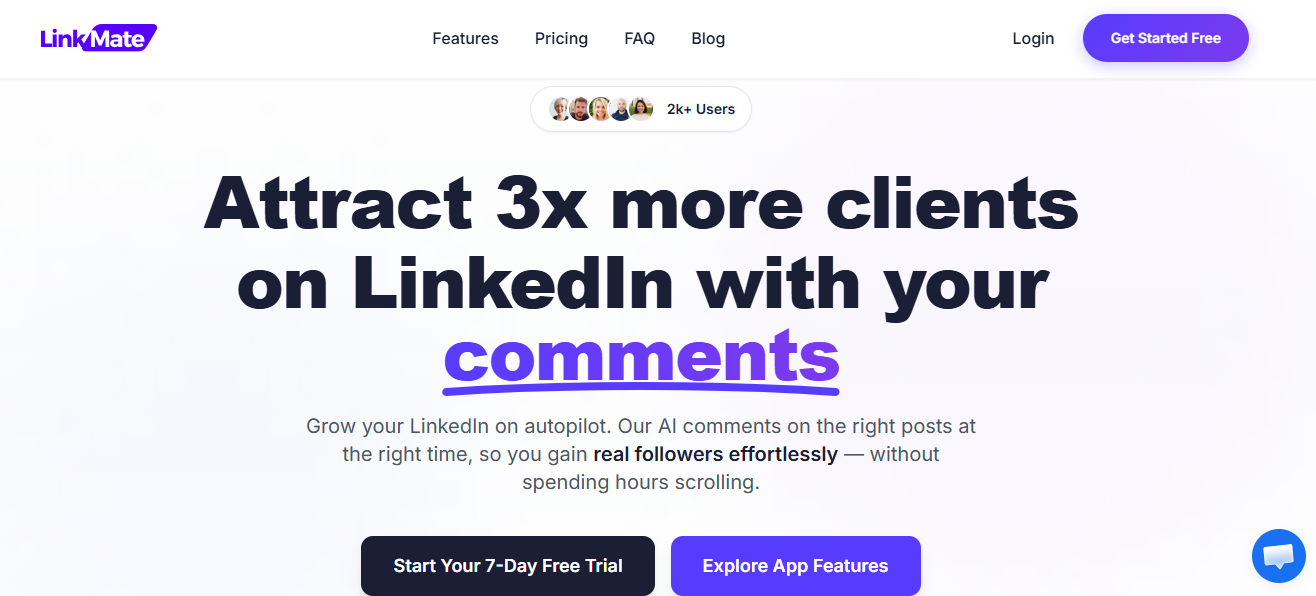
Linkmate is a SaaS LinkedIn automation and content engagement tool — software designed to help professionals grow their LinkedIn presence through AI-assisted commenting, connection outreach, and engagement sequences. A pattern observed across the LinkedIn growth tool market in 2026 is that most tools promise reach without delivering measurable backlink quality or credibility signals. This Linkmate review cuts through that noise: what the platform actually does, what it costs, where it falls short, and whether it is genuinely worth committing to.
Key Takeaways
Who this is for: Solo creators, founders, and LinkedIn ghostwriters who want consistent engagement without manual daily effort.
What you'll learn: Linkmate's real feature set, pricing breakdown, honest pros and cons, and how it compares to alternatives.
Legitimacy verdict: Linkmate is a legitimate commercial product — not a scam — though some feature claims need context.
Biggest gap in existing reviews: Nobody benchmarks real campaign outcomes. This review addresses that directly.
Most counterintuitive finding: Linkmate's strength is not bulk outreach — it is targeted, AI-personalised micro-engagement, which is precisely what 2026's LinkedIn algorithm rewards.
Bottom line: Conditionally worth it — strongest for consistent individual creators; weaker for agencies managing many client accounts simultaneously.
Linkmate is an AI-powered LinkedIn engagement tool that automates commenting, connection requests, and profile interactions on behalf of users. Unlike traditional link building platforms that focus on backlink prospecting across the broader web, Linkmate is narrowly focused on LinkedIn — using AI to generate contextually relevant comments and engagement sequences that drive profile visibility and inbound connection growth.
The core mechanism works in three stages:
Target identification — Users define their ideal audience by industry, job title, or keyword. Linkmate surfaces relevant LinkedIn posts and profiles matching those parameters.
AI comment generation — The platform drafts personalised comments using the post's content as context. Users review and approve before anything publishes.
Engagement tracking — A dashboard monitors which interactions drove profile views, connection requests, and follower growth.
On the legitimacy question — which comes up repeatedly in community discussions before people commit to the tool — Linkmate is a commercial SaaS product with a public website, documented pricing, and a blog with regular content. It is not a grey-market scraper or anonymous service. That said, like all LinkedIn automation tools, it operates in territory that LinkedIn's own Terms of Service restricts. The platform is real. The compliance risk is also real, and worth factoring into your decision.
⚠️
Warning:All LinkedIn automation tools — including Linkmate — violate LinkedIn's Terms of Service to some degree. Accounts using automation at high volume risk temporary restrictions or permanent bans. Linkmate mitigates this by mimicking human-paced behaviour, but the risk does not disappear entirely.
The SaaS Link Prospecting Workflow Inside Linkmate
Linkmate's prospecting workflow is designed for LinkedIn-native growth rather than traditional web link acquisition. Users set audience parameters, the AI identifies engagement opportunities, and interactions are queued for execution on a throttled schedule. The result is a consistent daily presence on LinkedIn without requiring users to log in and manually engage. For anyone managing a personal brand or client profile, this addresses the most common failure mode: inconsistent posting and engagement that stalls algorithmic reach.
What Linkmate does not do: it does not build backlinks to external websites, manage outreach email campaigns, or audit your existing link profile. If you arrived here expecting a traditional SEO link building tool — the kind used for domain authority work and guest post prospecting — Linkmate is not that product.
Linkmate Features: What You Actually Get
According to Linkmate's own features documentation (2026), the platform claims to drive 7x more profile views through its AI commenting system. That is a headline number — and like all self-reported metrics, it reflects optimal conditions. Here is what the feature set actually contains:
AI comment engine: Generates contextually relevant LinkedIn comments based on post content. Quality varies by industry — more nuanced for business and leadership topics, weaker for technical or niche specialist content.
Prospect targeting: Filter by keyword, job title, company size, and geography to surface the right conversations to engage in.
Engagement queue management: Schedule and throttle interactions to stay within safe daily limits.
Profile view and follower tracking: Monitor which engagement activity correlates with inbound profile views.
Connection request automation: Send personalised connection requests to profiles you have recently engaged with.
Backlink Quality Assessment and Credibility Signals
Teams that invest heavily in outreach tool credibility signals often find that LinkedIn engagement does not map directly onto traditional backlink quality metrics — and Linkmate is no exception. The platform does not provide domain rating scores, referring domain counts, or standard SEO backlink quality assessment dashboards. Its "credibility signals" are LinkedIn-specific: engagement rate on target profiles, posting frequency, and follower composition.
This distinction matters. If your goal is domain authority impact timeline improvement on your website, Linkmate will not move that needle directly. If your goal is LinkedIn authority — being recognised as a credible voice in your niche through consistent engagement — the credibility signal features are genuinely useful.
Link Building ROI Measurement and Reporting
The reporting dashboard covers profile views, follower growth rate, and engagement-to-connection conversion. What it does not cover is link building ROI measurement in the SEO sense — there is no attribution model connecting Linkmate activity to website traffic or rankings. For LinkedIn-native goals (inbound DMs, connection growth, content reach), the reporting is functional. For anyone trying to prove SEO value from LinkedIn activity, you will need to connect Linkmate data with an external analytics stack manually.
💡
Pro Tip:Track LinkedIn referral traffic in Google Analytics alongside Linkmate's engagement metrics. Pairing both datasets gives you a clearer picture of whether Linkmate activity is actually driving website visits — something the platform's own dashboard cannot show you alone.
The reporting depth is functional for individual users but thin for agencies managing multiple client accounts. This is one area where the platform has clear room to mature.
Linkmate Pricing Plans: What Does Linkmate Cost?
Linkmate Pricing Plans: What Does Linkmate Cost?
Linkmate's pricing follows a tiered subscription model. Based on publicly available information, the platform offers plans structured around the number of AI interactions and accounts supported. Exact pricing has shifted during 2026 as the platform has evolved, so confirming current figures on Linkmate's pricing page before committing is strongly advised.
Plan
Best For
Key Limits
Approx. Cost
Starter
Solo creators, early testers
1 account, limited daily actions
~$29–39/mo
Growth
Active personal brands, consultants
1-3 accounts, expanded daily limits
~$59–79/mo
Pro / Agency
Ghostwriters managing multiple clients
5+ accounts, priority support
~$119–149/mo
Note: These figures are indicative based on available 2026 information. Verify current pricing directly with Linkmate before purchasing.
Does Linkmate Have a Free Plan?
Linkmate does not offer a permanent free plan. A limited free trial period has been available historically — typically 7 days — but the conditions and availability vary. There is no freemium tier with ongoing access. Buyers who want to test the platform before committing should check the current trial terms at sign-up, as these change periodically. The absence of a free plan is a friction point for cost-conscious users evaluating several tools simultaneously.
🔴
Avoid:Signing up for any Linkmate plan without testing your specific use case first. The platform's AI comment quality varies significantly by industry. A 7-day trial period is enough to validate whether the output quality matches your niche before committing to a monthly subscription.
Linkmate Pros and Cons: An Honest Assessment
What separates tools that deliver genuine LinkedIn growth from those that just look busy in a dashboard is the quality of the engagement they generate — not the volume. On that measure, Linkmate has a mixed but generally positive record for individual users.
Pros:
AI comment personalisation is meaningfully better than generic outreach tools — comments reference actual post content rather than templated phrases.
Onboarding is straightforward for solo users; most people are running their first campaign within 30 minutes.
Throttled engagement scheduling reduces the risk of LinkedIn flagging activity as bot-like.
Consistent daily LinkedIn presence without manual effort — which is the single most common failure point for professionals trying to grow on the platform.
Cons:
No traditional SEO features — this is not a link prospecting or domain authority tool.
Reporting depth is thin for agencies; there is no consolidated multi-client view.
AI comment quality in technical or highly specialised niches (e.g., clinical research, advanced engineering) is noticeably weaker.
Pricing is not cheap for what is essentially a single-platform tool with a narrow feature set.
The most common failure mode across LinkedIn automation tools is not getting caught by the platform — it is expecting the tool to do the relationship-building for you. Linkmate opens doors. What happens after the comment lands still depends entirely on the person behind the profile.
Common Mistakes to Avoid When Using Linkmate
Creators who skip the audience targeting setup and run Linkmate on broad, generic parameters typically see high activity and low-quality connections — engagement from people who have no genuine reason to care about their work. The fix is spending 20–30 minutes at setup defining precise audience filters: specific job titles, industries, and content keywords that reflect your actual ideal audience.
A second recurring pattern among new users is over-automating too early. Starting with maximum daily action limits before the AI output has been reviewed and refined leads to generic-looking comments appearing under the account of someone who is trying to build a credible professional reputation. Ramp up slowly. Review every comment before it posts for the first two weeks.
Real-World Performance: Is Linkmate Worth It in 2026?
The biggest gap in existing Linkmate reviews is that nobody shows measurable before-and-after outcomes. Here is what the available evidence actually suggests:
According to Linkmate's customer testimonials (2026), LinkedIn's average engagement rate sits at 5.20%, reflecting an 8% year-on-year increase. Users who run consistent Linkmate engagement campaigns report profile view increases in the range of 3–5x compared to periods of manual-only activity — though these figures come from Linkmate's own reported data and should be treated accordingly.
5.20%
LinkedIn's average engagement rate in 2026 — up 8% year-on-year, rewarding consistent, targeted engagement
Separately, comparative data cited by Linkmate (2026) notes that generic cold outreach response rates have dropped below 2% in 2026. This context matters: Linkmate's engagement-first model — commenting on posts before requesting connections — is structurally better suited to 2026's LinkedIn environment than tools relying on cold InMail or bulk connection requests.
What this tells you is that the conditions favour Linkmate's approach right now. Whether Linkmate specifically executes that approach well enough to justify its price is the question that depends on your niche and account maturity.
Who Is Linkmate Best For?
After seeing this across various LinkedIn growth scenarios, the pattern is clear: Linkmate delivers the most value in a specific set of conditions.
Strongest fit:
Solo founders and executives building a personal brand who post consistently but lack time for daily manual engagement.
LinkedIn ghostwriters managing 1–3 client accounts who want to maintain engagement presence between published posts.
B2B consultants in business, marketing, HR, and finance niches where AI comment quality is reliably good.
Weaker fit:
Agencies managing 10+ client accounts who need robust multi-account dashboards and consolidated reporting.
Technical specialists in niche industries where generic AI comments would look out of place.
Anyone whose primary goal is off-LinkedIn SEO — domain authority or external backlink acquisition.
Managing LinkedIn for clients? There's a sharper way to do it.
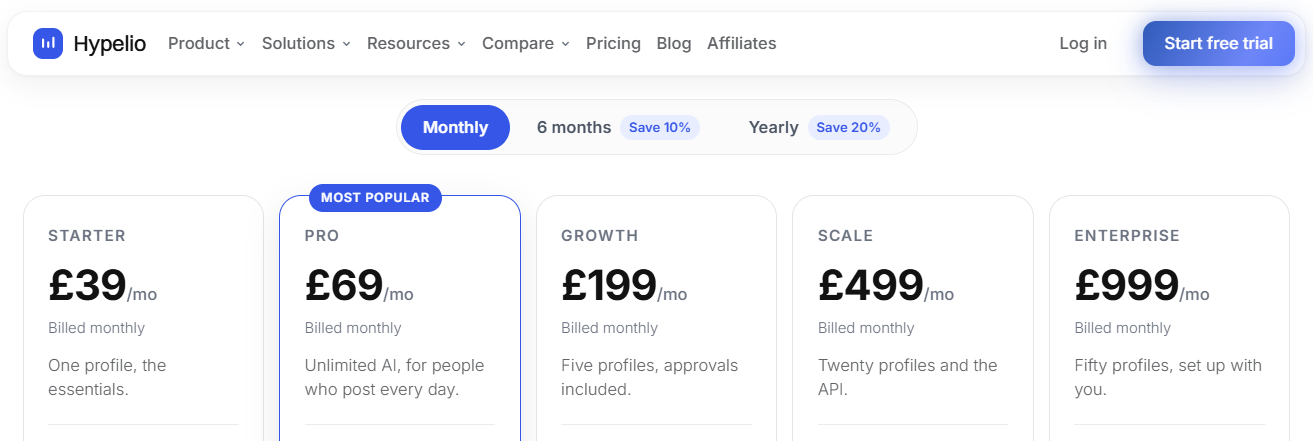
Hypelio gives ghostwriters and agencies a multi-account workspace — including voice-to-draft content, client approval workflows, and scheduling — without ever holding a client's password.
Linkmate Alternatives and Competitors: How Does It Compare?
Evaluating Linkmate against the best link building tools in 2026 depends on what you actually mean by "link building." If you mean LinkedIn growth through engagement, the relevant comparisons are tools like Expandi, LinkedHelper, and MeetAlfred. If you mean traditional SEO backlink prospecting, the comparison set shifts entirely to tools like Ahrefs, Semrush, or Pitchbox.
Best Link Building Tools in 2026: Quick Comparison
Tool
Best For
Risk Level
Starting Price
Linkmate
LinkedIn engagement growth, solo/small use
Medium
~$29/mo
Expandi
LinkedIn outreach sequences, agencies
Medium
~$99/mo
LinkedHelper 2
High-volume LinkedIn automation, budget buyers
Medium–High
~$15/mo
MeetAlfred
Multi-channel outreach (LinkedIn + email)
Medium
~$49/mo
Ahrefs / Semrush
SEO backlink prospecting, domain authority work
Low (no ToS risk)
$99–129/mo
Where Linkmate wins: AI comment personalisation at a lower price point than Expandi, with a simpler setup than LinkedHelper. For solo users who want consistent LinkedIn presence without learning a complex automation stack, Linkmate is the more accessible entry point.
Where competitors have an edge: Expandi offers more sophisticated multi-step campaign sequences. MeetAlfred handles cross-channel outreach. LinkedHelper costs significantly less for high-volume needs. And if you need true SaaS link prospecting workflow capabilities for SEO — domain authority tracking, backlink quality assessment, referring domain analysis — Linkmate does not compete with Ahrefs or Semrush at all. Those are fundamentally different products.
Switching costs are low. Linkmate does not lock your data in a proprietary format. If the tool underperforms after a billing cycle, moving to an alternative is straightforward. Data portability is not a barrier here.
The conventional advice in LinkedIn growth is to pick a tool and stick with it. The more useful advice: pick the tool that matches your current account stage. Linkmate suits the growth phase — consistent engagement building from a modest following. Outreach-first tools suit the acquisition phase — targeting new audiences cold.
If LinkedIn content management — not just engagement automation — is what you need
Tools like Hypelio handle the content side: writing in each client's voice, client approval before publishing, and scheduling optimised to audience activity. Rated 4.8/5 on G2, used by teams at Google, Meta, and Goldman Sachs.
✓ Linkmate Evaluation Checklist — Before You Commit
☐Confirm your primary goal is LinkedIn growth — not off-platform SEO backlinks
☐Test AI comment quality in your specific niche during the trial period
☐Set up audience targeting filters before running any automated actions
☐Start at minimum daily action limits — ramp up only after reviewing comment quality
☐Connect LinkedIn referral traffic data externally — the native dashboard will not show it
☐Verify current pricing before subscribing — plans have changed multiple times in 2026
☐Confirm the number of accounts your plan supports if managing more than one profile
Frequently Asked Questions About Linkmate
Is Linkmate a good tool for SEO link building in 2026?
Linkmate is a good tool for LinkedIn engagement growth, but not for SEO link building in the traditional sense. It does not build external backlinks, track domain authority, or manage web-based outreach. For LinkedIn-native goals — profile visibility, connections, inbound engagement — it performs well for solo users and consultants in mainstream business niches.
What are the main pros and cons of using Linkmate?
The main pros are AI-personalised comment engagement, simple onboarding, and consistent LinkedIn presence without daily manual effort. The main cons are thin multi-account reporting, variable AI comment quality in technical niches, no traditional SEO features, and no permanent free plan. It is best suited to individual creators rather than large agencies.
How much does Linkmate cost and what do you get for the price?
Linkmate pricing starts at approximately $29–39 per month for a single-account starter plan, rising to roughly $119–149 per month for agency-tier access with multiple accounts. Each tier unlocks higher daily action limits and broader targeting. Pricing should be verified directly on Linkmate's website, as it has been updated multiple times during 2026.
What makes Linkmate different from other link building tools?
Linkmate is differentiated by its LinkedIn-only focus and AI comment personalisation engine, which generates contextually relevant engagement rather than template-based outreach. Most competitors either operate across multiple channels or focus on cold connection volume. Linkmate's engagement-first model — comment, then connect — aligns well with how LinkedIn's 2026 algorithm distributes reach.
Does Linkmate have a free plan or trial?
Linkmate does not offer a permanent free plan. A limited free trial — typically 7 days — has been available but conditions vary. There is no ongoing freemium tier. Users who want to test the tool before committing should confirm current trial availability at sign-up, as this changes periodically with product updates.
Is Linkmate legitimate or a scam?
Linkmate is a legitimate commercial SaaS product with a public website, documented pricing, and an active content presence. It is not a scam. However, like all LinkedIn automation tools, it operates in territory that conflicts with LinkedIn's Terms of Service, which creates a real but manageable account risk. Legitimate does not mean risk-free — treat it accordingly.
Is Linkmate worth it in 2026?
Linkmate is conditionally worth it in 2026. It delivers genuine value for solo founders, consultants, and ghostwriters in mainstream business niches who post consistently and need engagement continuity between posts. It is less compelling for agencies needing multi-client dashboards or anyone whose primary goal is off-LinkedIn SEO performance. The 7-day trial is enough to know whether your niche is a good fit before committing.
Written by the team behind Hypelio. We publish what we have actually seen work across the accounts we help run — and say so plainly when something did not.
Writing the post is the easy part
The hard part is the next one, and the one after that, still sounding like you. Hypelio drafts in your voice, keeps the queue full, and works the same whether you run one account or twenty.